Since the introduction of Buddhism into the Eastern Territory, Guanyin is the most familiar Buddhist figure with the closest psychological distance. It is also the only Bodhisattva who embellishes the Buddhist gate with a graceful appearance and accomplishes it with a female body.
Among the thirty-three incarnations of Avalokitesvara, the most free, the least ceremonial, and the most beautiful is Shuiyue Avalokitesvara, also known as Shuixiangguanyin and Shuixiangxiang Bodhisattva. ""

Ming Dynasty Shuiyue Guanyin Mural Beijing Fahai Temple
According to legend, when Guanyin Bodhisattva displayed a treasure in the river in Hangzhou, a painter named Qiu Zijing happened to be watching by the river. In order to allow the world to see the Buddha statue together, he drew the treasure statue shown by Guanyin Bodhisattva in Shuiyue.
In the late Tang and Five Dynasties period, Shuiyue Guanyin statues have been seen in temple murals around the world. After the Northern Song Dynasty, the influence of Shuiyue Guanyin gradually expanded and became one of the most common forms of representation of Guanyin statues in later generations.
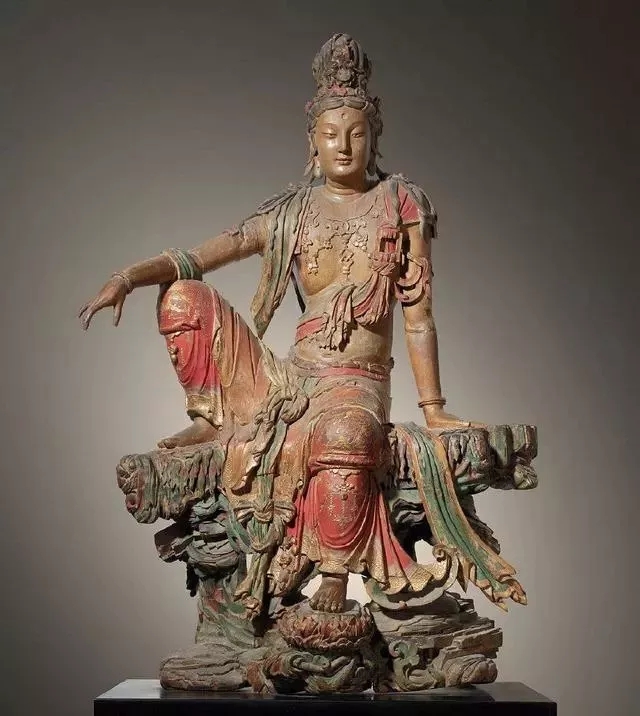
Jin Dynasty Wood Carvings with Gold and Color Sitting Statue of Guanyin
In the majestic forest of Buddhist statue art, Shuiyue Guanyin is the most humanistic and caring god. Change the Buddhist statues to stand upright or meditate. The right leg squats, the left foot relaxes, the right hand lifts slightly, and the left hand serves as a supporting point. It is unrestrained, free, and full of Chinese-style artistic beauty.
Therefore, Shuiyue Guanyin was favored by the majority of painters and sculptors once it was created, and it was deeply welcomed by the people with its increasingly life-like and secular attitude. Today, Hongxin sculpture gathers the essence of the Shuiyue Guanyin images of the past dynasties, and through the innovation of the bronze sculpture, it interprets the sculpture home decoration of Shuiyue Guanyin. Shuiyue is merciless, Guanyin is compassionate, and only the best is beautiful.
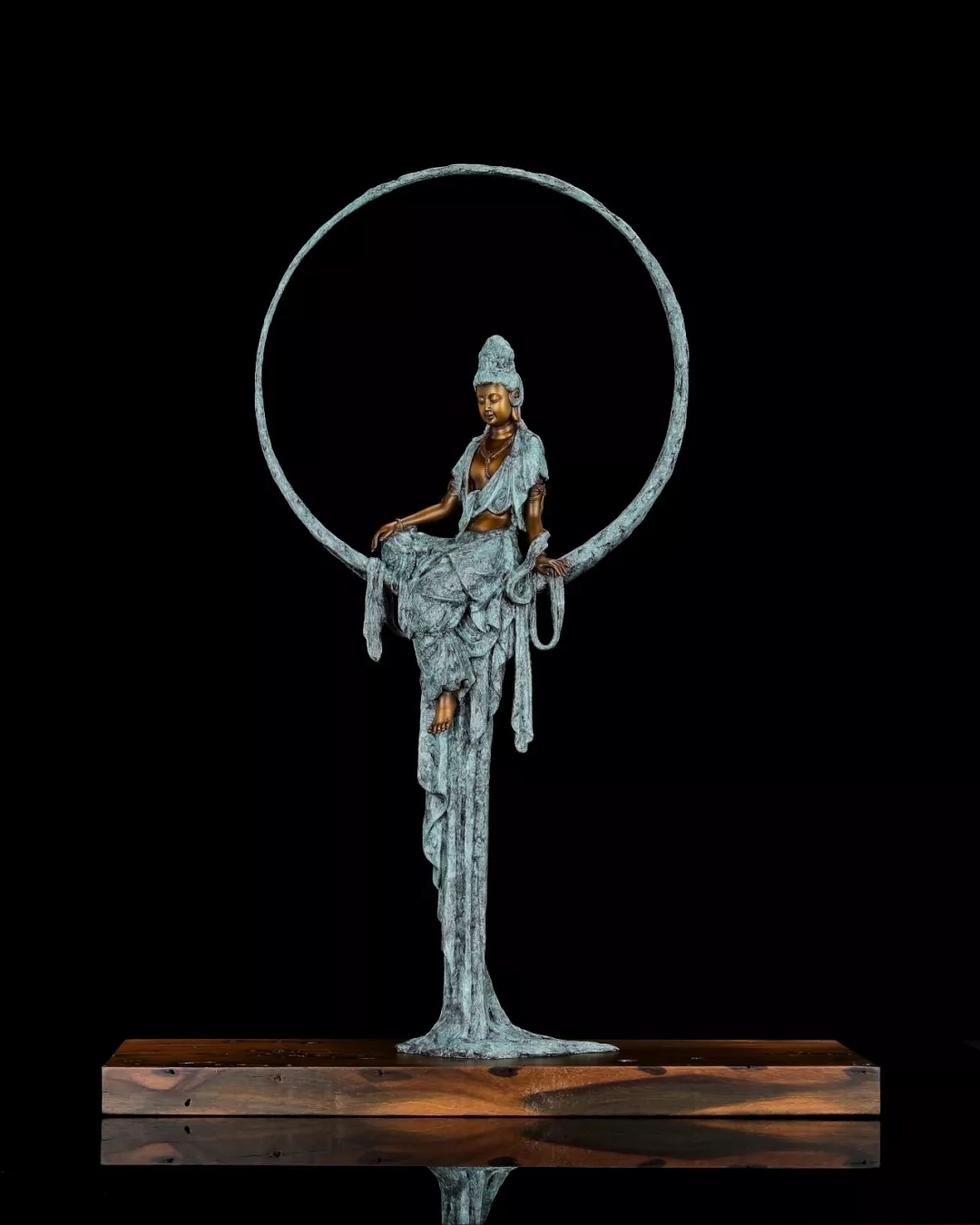
Hongxin sculpture "Water Moon Guanyin"
In the carving of Hongxin's sculpture "Shuiyue Guanyin", Guanyin Bodhisattva wears a chest on his chest, wears a long scarf on his shoulders, wears a long skirt, heaves up and down, his right arm rests on his flexed right knee, his left hand rests on the seat, cross-legged While sitting, the expression is quiet and comfortable. Its soft silk dress reveals a beautiful silhouette. The characters are kind and compassionate, as if looking at the full moon in the water, or looking down on the living beings.
Moon and Buddha
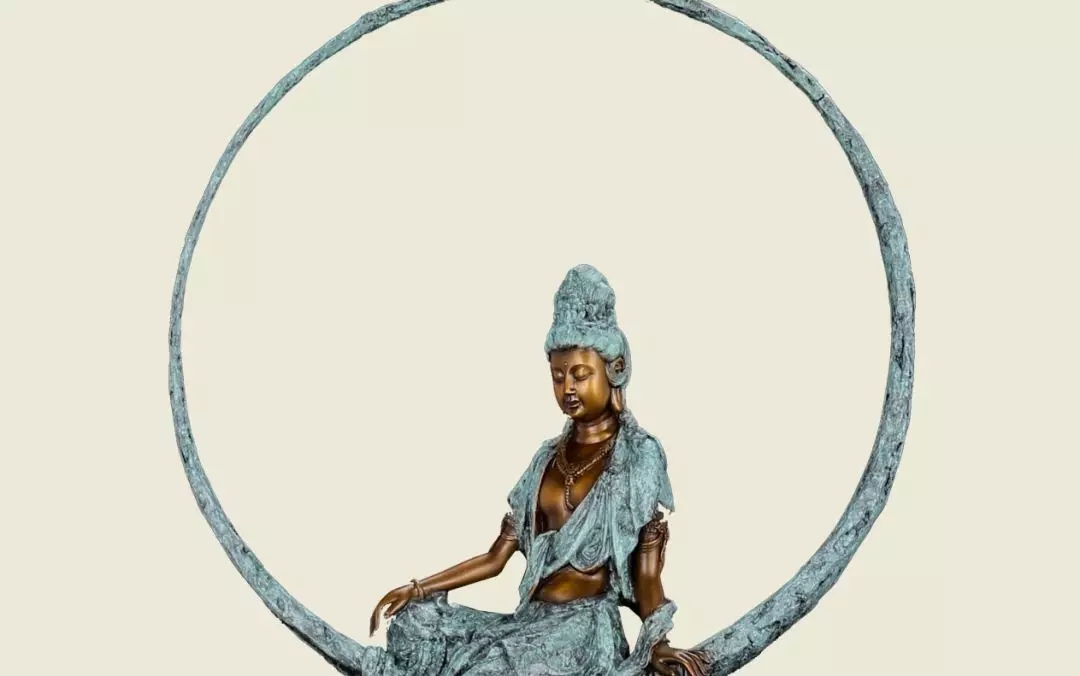
The water is vast and the moon is heavy. The round moon behind is a symbol of the Shuiyue Guanyin image. In the Hongxin sculpture "Shuiyue Guanyin", the full moon has also become the light wheel of the Buddha's light. The shape of the Guanyin sitting on it is appropriately reflected. The realm of Guanyin "changing music and purifying" and "full of dharma and joy" seems to enable the spectator to listen to the deepness of the soul about liberation and freedom from the undetectable appearance, feelings and ease of the Buddha. The secret singing achieves a high degree of unity in the form, content and spirit of religious art works.
Low and eyebrow
"Tai Ping Guang Ji" Volume 174 quoted "Talking about" said: "Xue Daoheng traveled to Zhongshan Kaishan Temple, saying that the young monk said:'What is Vajra's wrath? What is the bodhisattva's low eyebrow?' Demon; the bodhisattva lowered his eyebrows, so there are six ways of compassion.'"
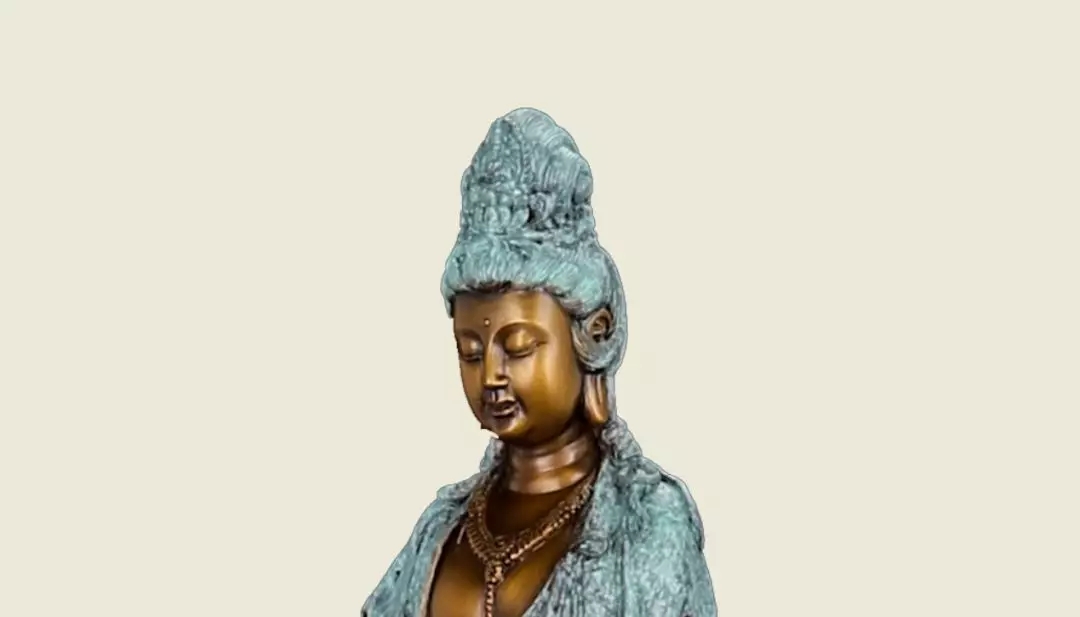
The eyes of Guanyin Bodhisattva in Hongxin sculpture "Shuiyue Guanyin" are slightly closed, which fits the "low eyebrows and smooth eyes" of the Buddha statue, that is, "two separate, eight closed"-two points outside, eight points inside, two points world , Eight-point view of freedom, has its own Zen in it. Low eyebrows are not just an expression, a gesture, but also a presentation of life.
Long skirt and green water
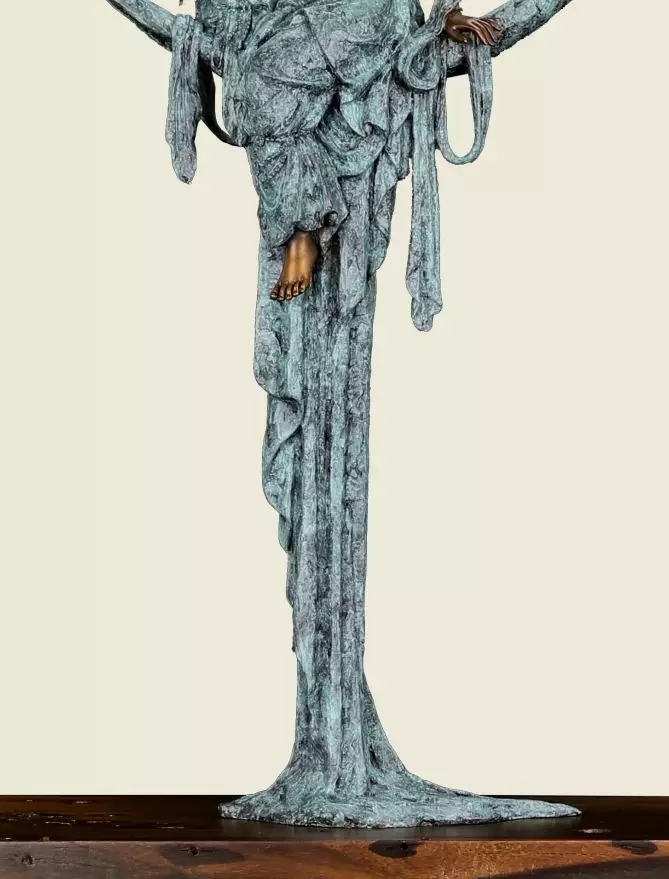
The core feature of the Shuiyue Guanyin statue is the incarnation of Avalokitesvara's one-phase view of the moon phase in water. Moon in water is one of the most famous metaphors of Mahayana Buddhism. Just like the moon in the water and the flower in the mirror, the moon in the water is the image of the moon, and the non-moon entity means that the laws have no self nature and no substance.
Hongxin's sculpture "Shuiyue Guanyin" in the treatment of the lower body long skirt, dark and all kinds of methods have no self-substance, no physical charm. The long green skirt hangs down, as if the green water lingers. The beauty created by using the bronze material with smart techniques is shocking.

"On the clear water, in the false white light, seeing its appearance, everything is empty." If Bai Juyi's "Painting of Water Moon Bodhisattva" is the best statement of the beauty of the water moon Guanyin, then the Hongxin sculpture " "Shuiyue Guanyin" shows the best bronze sculpture of Shuiyue Guanyin from form to meaning.